
Fear Aggression Case Study
 You’ve probably heard of the “fight or flight” response, which simply begs the question: When faced with something that scares you, do you stay and fight or do you run away? Different triggers cause each of us to react differently, but chances are that, at some point, something will make us run away and something will make us fight.
Dogs, instinctively, face the same decision when they are afraid something. More often than not, their reaction is to fight, and this is what’s known in the world of dog training as “fear aggression.”
This can be scary for owners who find their beloved, though admittedly anxious, dog turning on them and/or loved ones. However, there is a solution to this problem, and, quite simply, it’s a matter of turning the dog’s focus away from what scares it and toward the owner.
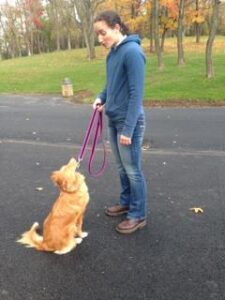
A few weeks ago, I met a young dog named Dallas who was beginning to show signs of fear aggression. Her owner noticed that she was becoming anxious while outside, especially at night, and she was beginning to snarl and snap at the other dog in the household.
I explained to the owner that Dallas’s aggression stems from a feeling of insecurity. In a pack, the Alpha dog would make the decisions for the group—showing the other dogs what to be afraid of, what not to be afraid of, how to react to certain stimuli, etc. In the home, the owner must take on that role.
Dallas responded well to crate training and basic obedience lessons. The crate acts as a safe space for the animal when he or she feels stressed out. Basic obedience lessons serve two purposes: First, they teach the dog to respond instantly to the owner’s commands. Second, they teach the dog to focus on his/her owner rather on their own instincts and fears.
After a few weeks of training with me and her dedicated owners, Dallas learned to put her fears aside and her aggression with them. She now knows that if her owners act as if there is nothing to be afraid of and tell her she needs to lie down and calm down, she can do so and everything will be fine.
This type of in-home training creates a bond of trust between the owner and their dog, improving the overall relationship and bringing a sense of calm to the household.
To see how Colonial Dog Training can help you improve your canine/human relationship, give us a call at 800.649.7297.